How to Budget When Your Income Changes Monthly

Listen to this article
If your income is different every month, most budgeting advice falls apart. The 50/30/20 rule assumes you know what 100% is. Automated transfers assume a predictable deposit. And “just spend less than you earn” isn’t helpful when you don’t know what you’ll earn until the money shows up.
But irregular income doesn’t mean you can’t budget. It means you need a system that accounts for the uncertainty instead of pretending it doesn’t exist.
How do you budget when your income changes every month
The core idea is simple: budget from your floor, not your ceiling.
Look at your income over the past six months and find the lowest number. That’s your baseline: the amount you can reasonably expect even in a slow period. Build your entire budget around that number, not your average and definitely not your best month.
How you calculate that baseline depends on your situation.
Freelancers and self-employed
Your income might swing 30–50% month to month. Look back six months minimum, ideally twelve. Use the lowest month, not the average. Averages hide the bad months and give you a number that feels safe but isn’t.
Gig workers (delivery, rideshare, contract work)
Income tends to be more volatile and seasonal. Look at your worst stretch, not just your worst single month. If December was slow and so was January, your baseline should reflect that pattern, not just the single worst data point.
Commission earners
You probably have a base salary plus variable compensation. Your baseline is the base alone. Treat commissions as surplus, even if they’ve been consistent, because the quarter they drop is the quarter that breaks your budget if you were counting on them.
If you’ve been at your current work situation for less than six months, use the lowest month you have and subtract another 10–15% as a cushion. Being conservative here costs you nothing. Any month above baseline is a bonus, not a surprise.
List your non-negotiable expenses first
Before you allocate a single dollar of surplus, you need to know your floor: the minimum it costs to keep the lights on and the bills paid.
Go through last month’s bank or credit card statements and pull out everything you can’t skip:
- Rent or mortgage
- Utilities
- Groceries (actual spend, not the number you wish it were)
- Insurance premiums
- Minimum debt payments
- Transportation (gas, transit, car payment)
- Any subscriptions you genuinely need right now
Use real numbers from your statements, not estimates. Most people underestimate groceries by 20–30% and forget about quarterly bills like car insurance or annual subscriptions that hit once a year. Total these up. This is the number that has to be covered before anything else.
If your non-negotiable total is close to or above your baseline income, that’s important information. It means you either need to cut something from this list or find ways to raise the floor. But at least now you can see the problem clearly instead of wondering why you’re always short at the end of the month.
Don’t forget about taxes if you’re self-employed
This catches a lot of freelancers and gig workers off guard. When you’re a W-2 employee, taxes are withheld before you ever see the money. When you’re self-employed, that money sits in your checking account looking like it belongs to you. It doesn’t.
Set aside 25–30% of every payment you receive into a separate account and don’t touch it. When quarterly estimated taxes come due (April, June, September, and January), the money is already there. The exact percentage depends on your tax bracket and state, but 25–30% covers most situations without leaving you short.
If you want to be more precise, look at what you paid in taxes last year and divide by your total gross income. That gives you your effective rate. Add two or three percentage points as a buffer, because owing the IRS in April is a particular kind of stress you don’t need on top of irregular income.
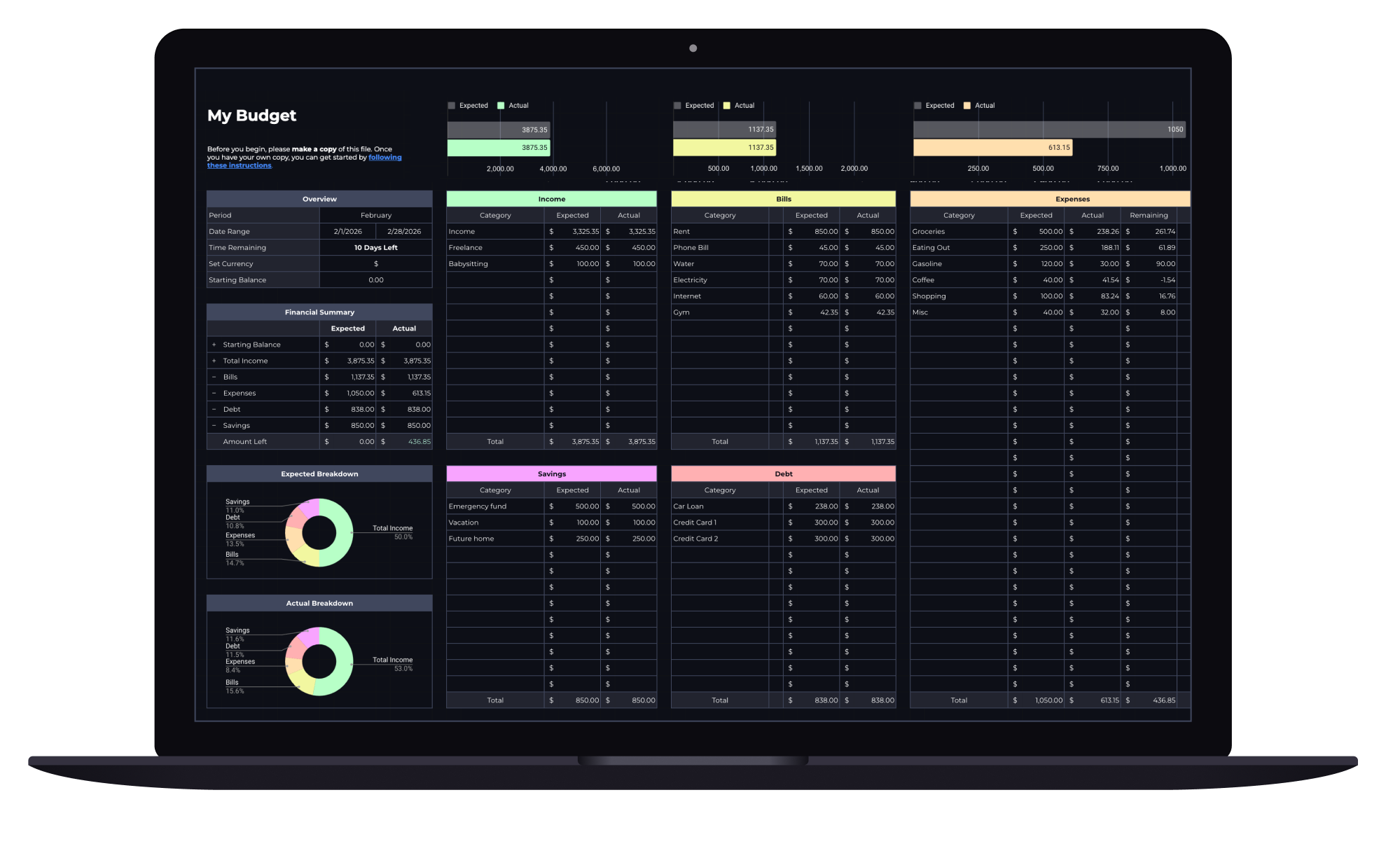
I track the tax set-aside alongside everything else in a Budget Spreadsheet I originally built for my own freelance income. There’s a row at the top of each month that shows take-home after the tax hold, so I’m always budgeting from the real number, not the gross. That one change eliminated the quarterly panic of suddenly needing to find a few thousand dollars.
Use a pay-yourself system when you earn more than baseline
When you earn more than your baseline in a given month, that extra money needs a plan. Otherwise it gets absorbed into spending you won’t remember by the time the next slow month hits.
Here’s a simple framework. Say your baseline is $3,000 and you bring in $4,200 this month. That’s $1,200 in surplus. Before you spend any of it, split it:
| Allocation | Share | Amount | Purpose |
|---|---|---|---|
| Buffer | 50% | $600 | Carries you through lean months |
| Financial goals | 30% | $360 | Debt payoff, emergency fund, whatever you’re working toward |
| Discretionary spending | 20% | $240 | Spend this without guilt, you earned it |
The exact percentages don’t matter as much as the habit. What matters is that you decide what happens to the surplus before it arrives. When $1,200 shows up in your account with no plan, it disappears into meals out and online orders. When it shows up with a plan, most of it actually ends up where you intended.
Keep building the buffer until you have two to three months of non-negotiable expenses saved. After that, you can shift more of the surplus toward goals or quality of life.
The part nobody talks about
Irregular income isn’t just a math problem. It creates a specific kind of anxiety that people with steady paychecks don’t fully understand: the low hum of not knowing whether next month will be fine or terrible. Some people check their bank account three times a day. Others avoid looking at it entirely. Both reactions are normal.
A baseline budget won’t make that anxiety disappear, but it changes the shape of it. Instead of a vague dread about money, you’re looking at a specific number. You’re either covered this month or you know exactly how much you need to close the gap. That’s a much more solvable problem than “I don’t know where I stand.”
What about months where you earn less than your baseline
This will happen. It’s the whole reason you built the system this way.
If you’ve been setting aside surplus during good months, this is when you pull from the buffer. That’s not a failure. It’s the system working exactly the way it should. The buffer exists for this.
If you haven’t built up the buffer yet, act quickly. Cut everything that isn’t on your non-negotiable list for the month. Pause subscriptions, skip dining out, be honest with yourself about what you can do without for 30 days. The sooner you tighten up in a lean month, the less damage it does. Most people wait until the month is half over and the gap is already too wide to close without a credit card.
One thing that helps: keep a short list of expenses you can cut immediately when a slow month hits. Having that list ready means you don’t have to make those decisions while you’re already stressed about money. You just execute the plan.
The point isn’t to predict your income
It’s to stop pretending it’s predictable.
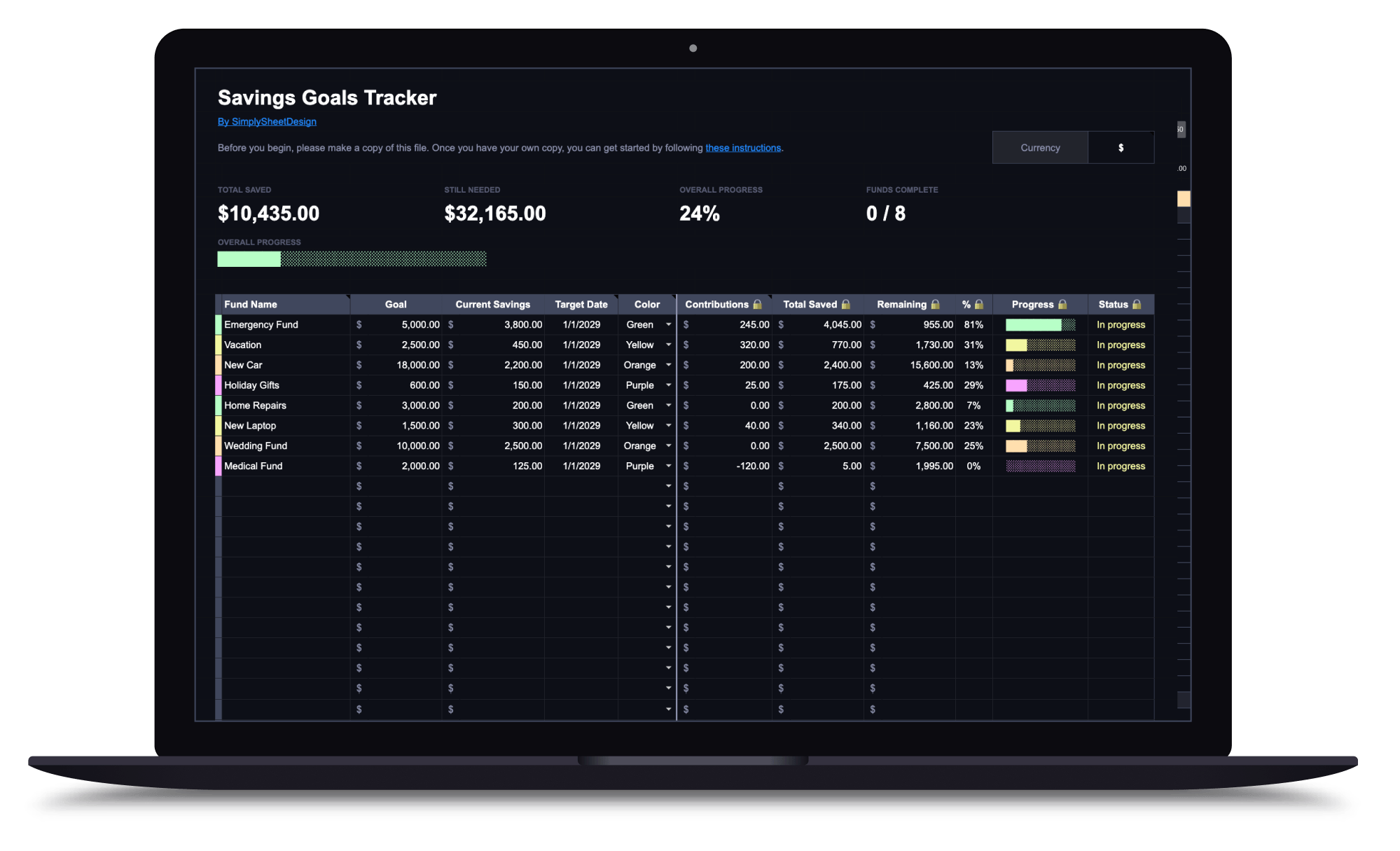
Most budgeting systems are built for people with a salary. If that’s not your situation, you don’t need a different app. You need a different starting assumption. Build from the floor, plan for the surplus, save during the good months so the bad ones don’t set you back. It’s not glamorous, but it works. And after a few months of it, you stop dreading the first of the month. If you want a ready-made system that handles all of this, take a look at the Budget Spreadsheet I built for exactly this situation.
And if your situation is the opposite (a consistent paycheck, pension, or benefit that doesn’t change), budgeting on a fixed income covers how to make the most of a predictable but limited amount. And if your income is steady but just arrives every two weeks instead of monthly, budgeting when you get paid every two weeks covers that timing problem specifically, separate from the amount-variability this article focuses on.