Where Is My Money Going? How to Find Out

Listen to this article
If you’ve ever stared at your bank account a few days before payday and thought “where did it all go,” you’re not doing anything wrong. Most people don’t have a spending problem. They have a visibility problem. The money is going somewhere specific and traceable. It just hasn’t been written down anywhere yet.
The good news is that fixing this doesn’t take a finance degree or a complicated system. It takes about five minutes a day for a few weeks.
Why does this feel so hard to figure out?
Most spending today is invisible by design. A card tap here, a subscription renewal there, a food delivery order that felt small in the moment. None of it shows up as one number you can look at. It shows up as dozens of small numbers spread across days and accounts, and your brain just isn’t built to add those up in real time.
This is why “I’ll just be more careful” rarely works on its own. Being careful requires knowing what you’re being careful about. Without a record, you’re trying to budget from memory, and memory is exactly where small purchases go to disappear.
What’s the first step to actually understanding my spending?
Track every transaction, expense, and purchase for about three months. Not categorize, not judge, not adjust anything yet. Just write it down as it happens.
Three months sounds like a long time, but it’s the minimum window that captures the full picture. A single month might miss an annual subscription renewal, a less frequent expense, or just be an unusually quiet or unusually expensive stretch. Three months gives you something closer to the truth.
Once you can see where the money is actually going, adjusting your habits stops being a guessing game. You’re not trying to “spend less” in the abstract. You’re looking at a specific number next to a specific category and deciding if it still makes sense.
What’s the easiest way to actually stick with tracking?
The habit that works best is small and boring on purpose: a few minutes at the end of each day, going through that day’s transactions and logging them.
A simple version of this looks like getting a bank notification summary in the evening and spending five minutes adding everything to a spreadsheet. That’s it. No elaborate system, no hour-long Sunday planning session, just a short daily check-in.
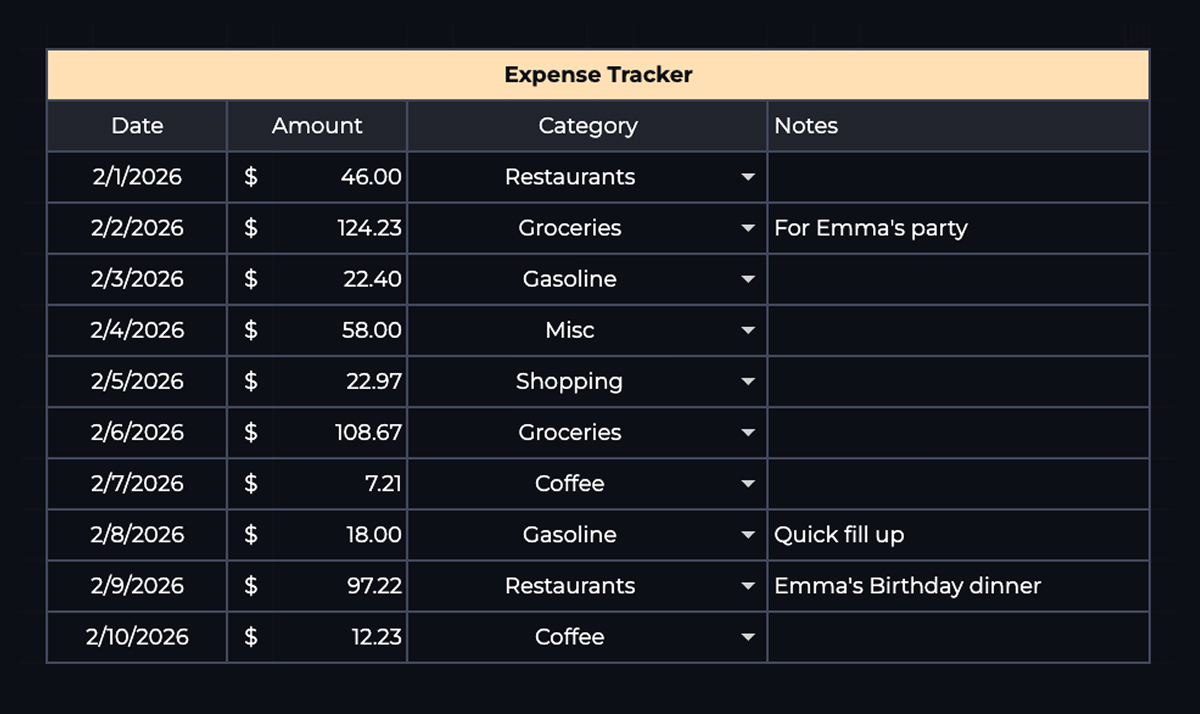
The reason this beats a bigger weekly or monthly effort is momentum. Five minutes a day rarely gets skipped because it’s not a big enough task to dread. A 45-minute weekly session is much easier to push to “tomorrow,” and tomorrow has a way of becoming next week.
Keeping the process simple matters as much as keeping it short. The moment tracking starts to feel complicated is usually the moment people quietly stop doing it.
Where should I actually be logging all of this?
A spreadsheet is the most practical tool for this, mainly because it’s flexible enough to match how you actually spend instead of forcing your spending into someone else’s categories.
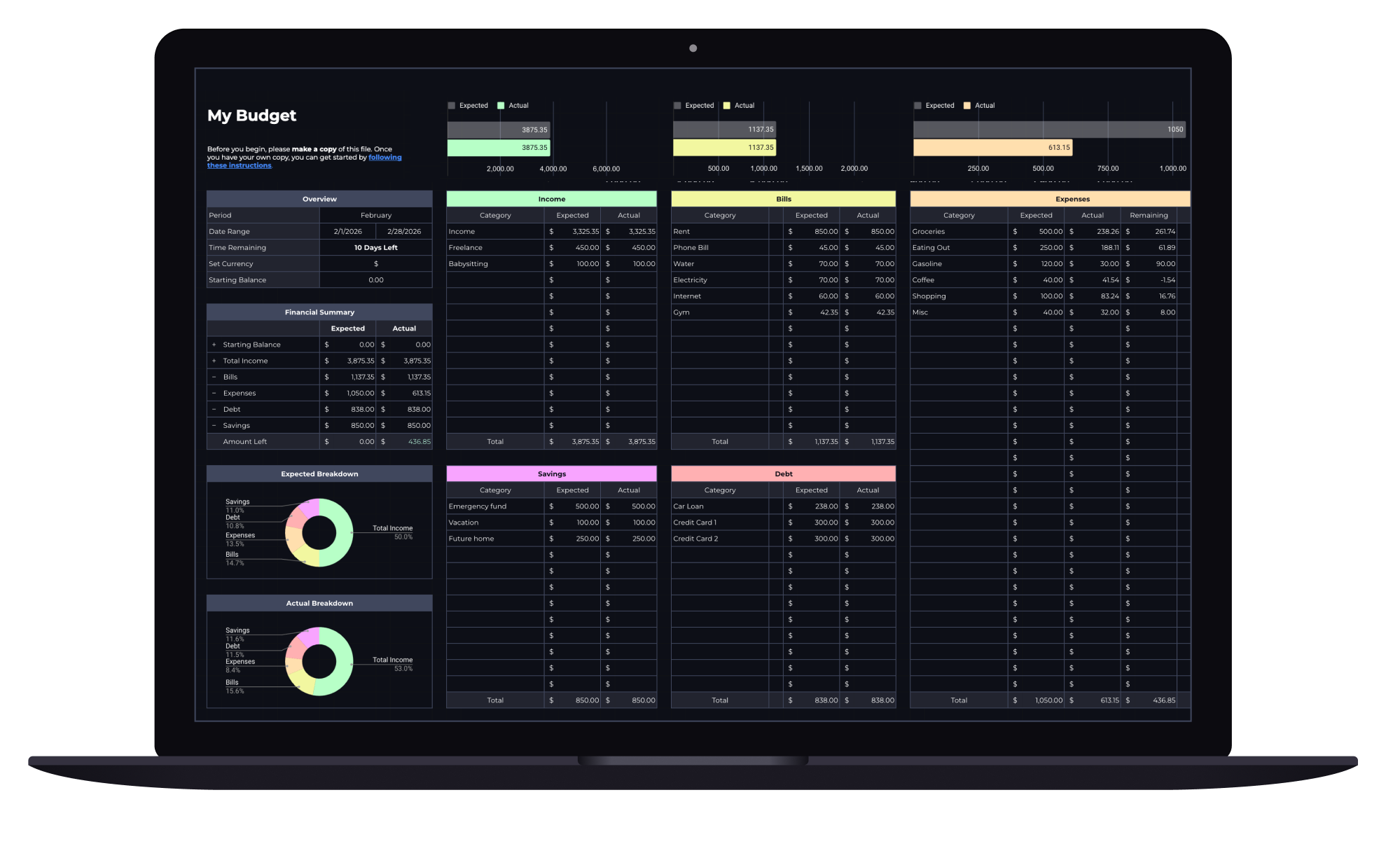
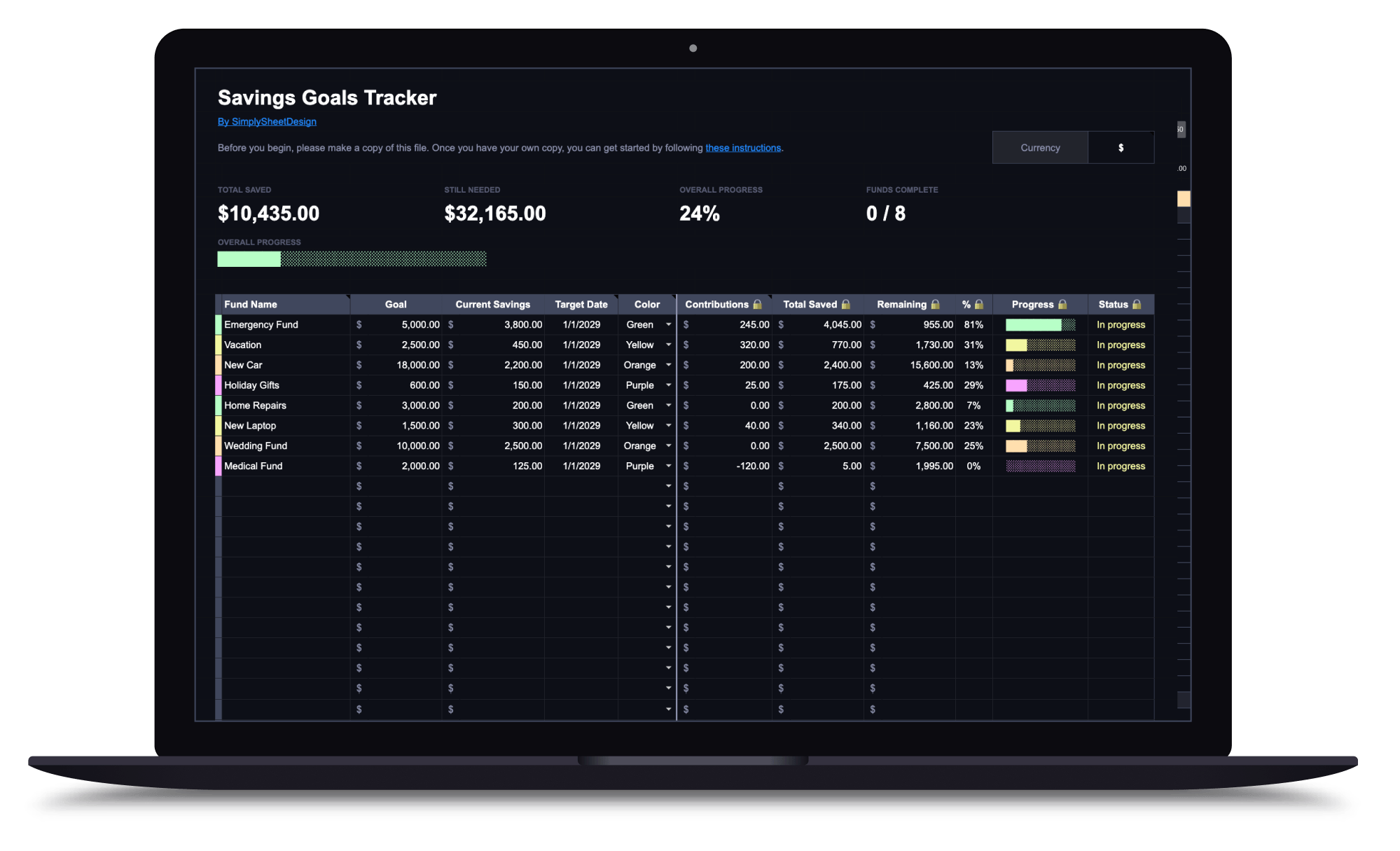
You can build one yourself in Google Sheets or Excel from scratch, and plenty of people do. If you’d rather skip the setup work, a budget spreadsheet with a built-in expense tracker already has the categories, totals, and formulas in place, so the only thing left to do is log each day’s spending as it happens.
Either way works. What matters is that the tool stays out of your way enough that the daily habit actually survives past week one.
What happens after the three months are up?
This is where the real value shows up. Once you have a few months of real numbers in front of you, patterns tend to be obvious in a way they never were from memory alone. Maybe dining out is double what you assumed. Maybe a handful of small subscriptions add up to a surprising monthly total. Maybe nothing is actually wrong, and the anxiety was bigger than the actual numbers.
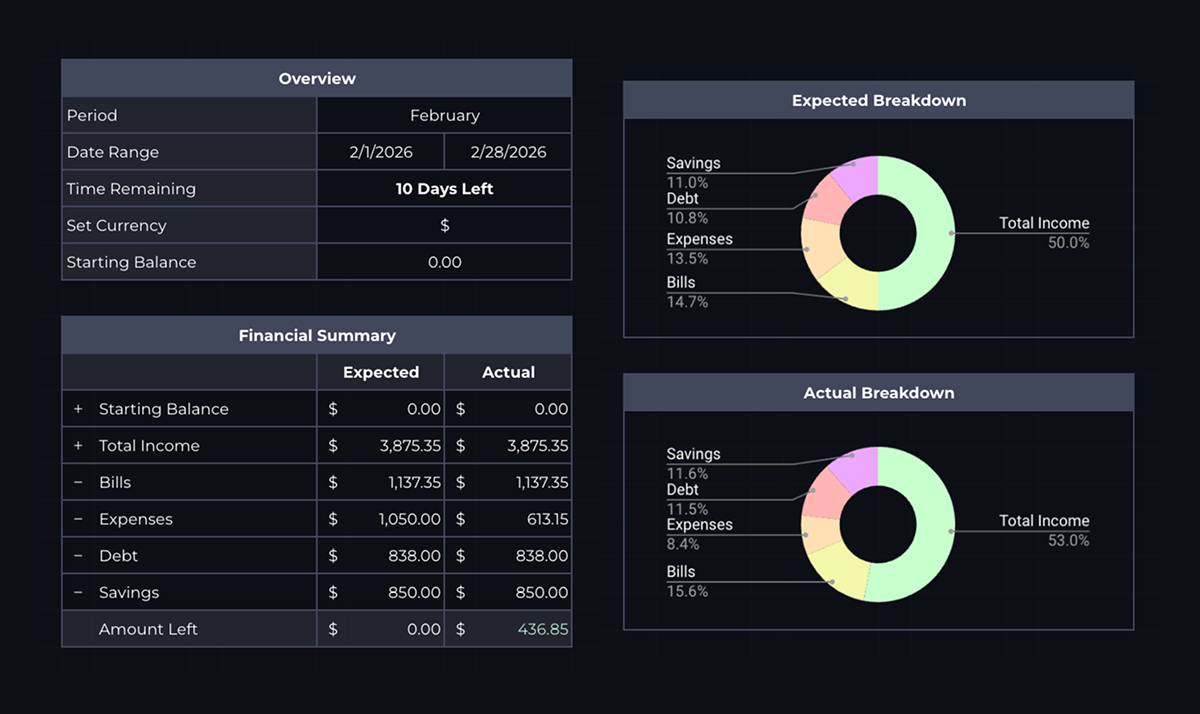
From there, adjusting is straightforward. You’re not cutting spending across the board and hoping it works. You’re looking at specific categories with specific totals and deciding, one at a time, what still earns a place in your budget. If you want a simple structure to compare those totals against, the 50/30/20 rule splits take-home pay into needs, wants, and savings, and now you have the real numbers to check yourself against it. If you’re not sure whether you’ve tracked enough to start budgeting, a quick readiness assessment can help you decide.
The financial anxiety that comes from not knowing tends to fade quietly once you actually know. Not because the numbers are necessarily great, but because uncertainty is almost always more stressful than the truth, whatever the truth turns out to be.
If your income varies month to month, tracking is still the first step, but your budgeting approach will look a little different. Budgeting with irregular income covers what to do once you have the numbers but your paycheck isn’t predictable. If your income is steady but limited (a pension, Social Security, or a fixed salary), making a budget work on a fixed income covers how to get the most from what’s already coming in. And if you’ve tried tracking before and it fizzled out after a few weeks, tracking expenses without burning out covers how to catch up after a missed day instead of treating it as a reason to quit.