How Sinking Funds Prevent Fake Emergencies

Listen to this article
Birthdays happen every year. Christmas happens every year. Annual insurance bills happen every year. Car registration, vacations, home maintenance, gifts, school supplies: they all happen on a schedule, and nothing about them is a surprise.
Yet when the month finally arrives, it often feels like an emergency anyway. The money wasn’t there, and now it is, if you want it badly enough, but it’s painful. The problem isn’t that these expenses are unexpected, it’s that you never set the money aside for them when you had the chance. Sinking funds fix that specific problem.
Why do predictable expenses still feel like emergencies?
You know Christmas is coming. You know that car insurance renewal is due in October. You know your dog needs a vet visit every year, your gutters need cleaning, and you want to take a vacation. None of that is a shock.
But somewhere between “knowing” and “planning,” the mental math doesn’t happen. Maybe the expense is far enough away that it doesn’t feel real yet. Maybe it’s easy to tell yourself you’ll handle it when the time comes. Maybe you’ve never added up how much these expenses actually cost, so when the bill arrives, the number feels bigger than it should. The result is the same either way: the expense arrives, the money has to come from somewhere, and a known event feels like an unexpected crisis.
This is one of the most common patterns in personal finance. People describe it as an “emergency,” but emergencies are, by definition, unforeseeable. A car breakdown is an emergency, a medical bill you didn’t expect is an emergency, a job loss is an emergency. A birthday is not. What catches people off guard isn’t the expense itself, it’s that the money wasn’t waiting.
What is a sinking fund?
A sinking fund is money you set aside gradually for a known future expense. That’s the whole concept: you know the expense is coming, roughly how much it will cost, and roughly when you’ll need it, so instead of scrambling when the bill arrives, you spread the cost across several months and let it accumulate.
This creates one key difference from the other money categories you probably already track: it’s separate from both your emergency fund and your monthly budget. Your monthly budget covers recurring, predictable expenses that happen every single month, like rent, groceries, utilities, and subscriptions, so they’re already built into your monthly spending and don’t require special planning. Your emergency fund covers true surprises, the urgent car repair, the unexpected medical bill, the appliance that fails without warning, and you keep that money set aside specifically for when life doesn’t go as planned. If the boundary between the two still feels blurry, sinking funds and emergency funds side by side walks through which one a given expense belongs in.
A sinking fund covers the middle ground: expenses that are predictable and scheduled, but don’t happen every month. Christmas is one day a year. Annual insurance bills arrive once a year. A vacation might happen once or twice a year. Vehicle maintenance is infrequent but planned for. These expenses are real, they’re significant, and they’re known in advance, so you plan for them by saving a little bit each month.
Why do sinking funds make budgeting feel easier?
The biggest frustration in budgeting isn’t usually the small purchases. It’s the moments when a large, non-monthly expense suddenly arrives and disrupts everything. You have a stable monthly budget, your paychecks are consistent, and your groceries, rent, utilities, and subscriptions are all accounted for. Then October arrives and your car insurance is due, or November brings holiday shopping, or you’ve planned a vacation in July, and suddenly your budget doesn’t work anymore. One month you need an extra $500 or $1,000 or $3,000 that wasn’t in your original plan, and now you have a choice: pull from savings, use a credit card, cut somewhere else, or just accept the financial hit.
Sinking funds change this dynamic. Instead of Christmas being a $600 crisis in November, it becomes $50 added to your budget in January, February, March, April, May, June, July, August, September, October, and November. The expense is still $600, but now it’s spread across months when you have room for it, and every month the amount becomes a bit less noticeable. This is why sinking funds make budgeting feel easier: they distribute large expenses across time, so no single month gets derailed.
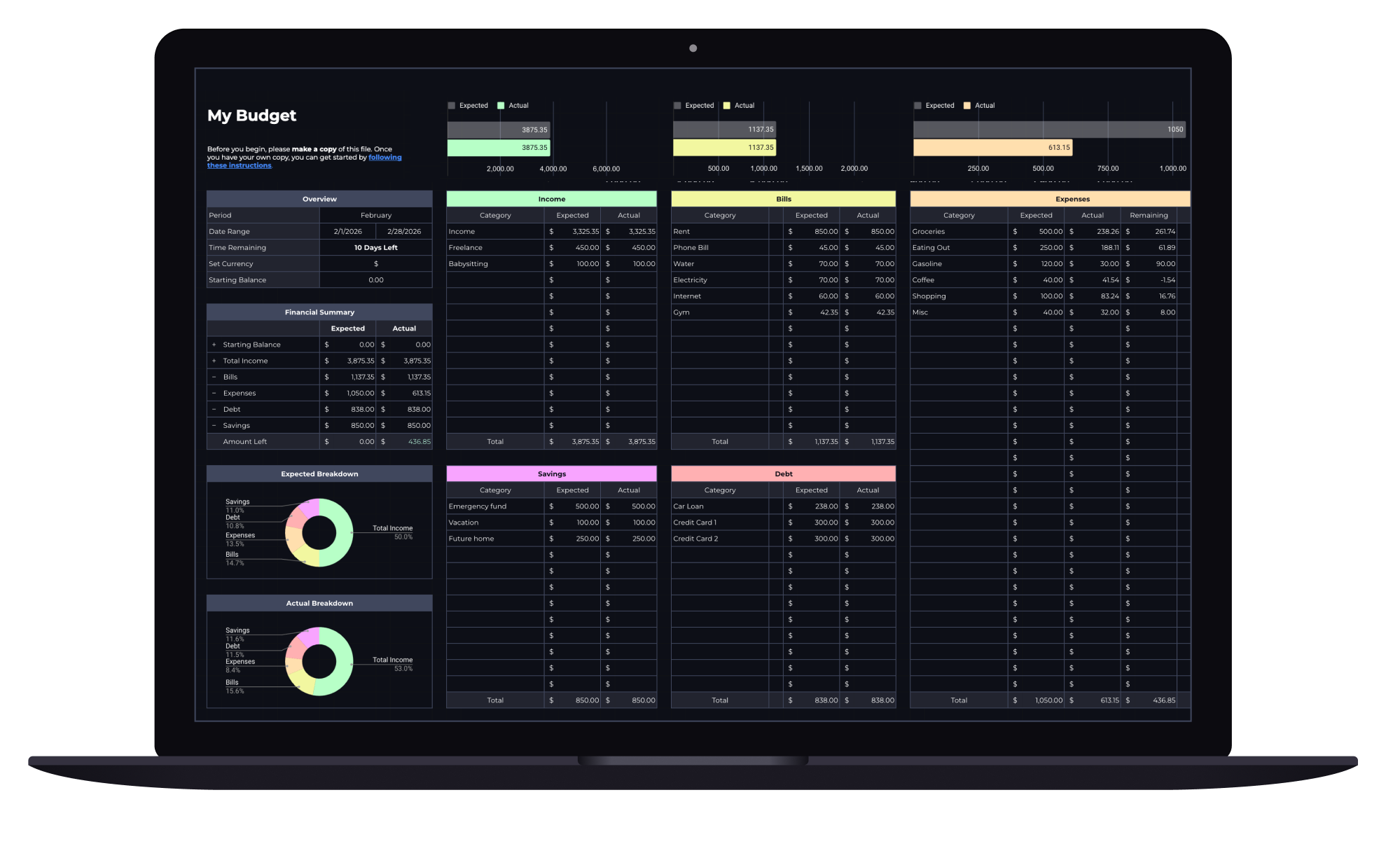
The same principle applies to everything else on the schedule: annual insurance premiums, vehicle registration, property taxes, home maintenance, gifts, vacations, medical expenses. Instead of one painful month, every month contributes a little bit, and your monthly budget becomes much more stable because large expenses stop appearing all at once. You stop living month to month in a state of financial surprise. This is one reason budgets that last tend to be the simple ones, fewer disruptions from predictable expenses means less to recover from each month, and less reason to abandon the system entirely.
How many sinking funds should you have?
There’s no magic number. Some people keep four or five sinking funds running at all times, others keep just one and add another once the first is fully funded, and neither approach is wrong. The real question is which expenses actually need one.
Most people only need sinking funds for costs that hit three criteria:
- Predictable. You know it’s coming and roughly when.
- Meaningful. It’s large enough that saving for it each month actually makes a difference in your budget.
- Not monthly. It doesn’t happen every single month.
By this standard, Christmas probably needs a sinking fund, and so does annual insurance. Vehicle maintenance qualifies, a planned vacation does too, and a birthday gift for someone close to you might, along with things like annual dental work, home repairs, new tires, or professional development fees. But not everything needs one. Your daily coffee habit, your monthly streaming subscriptions, your annual haircut, these either happen too regularly or are small enough to just pull from your monthly spending.
Starting with too many sinking funds creates unnecessary maintenance. You end up tracking twelve different savings goals, forget why you started, and the habit breaks down. Start with one or two categories that matter most to you, get comfortable with the rhythm of saving each month and watching the balance grow, then add more if it makes sense. The goal is a system simple enough that you’ll actually keep using it.
Not sure whether a specific expense actually fits one of those three criteria? Answer five quick questions below and this tool will tell you whether it belongs in a sinking fund, your emergency fund, or your regular monthly budget.
What are you saving for?
Assessment result
How much should you save each month?
The math is simple: take the total amount you need and divide by the number of months you have to save it.
Target amount ÷ Months until needed = Monthly savings
Here are a few realistic examples:
| Sinking fund | Target amount | Months to save | Monthly savings |
|---|---|---|---|
| Christmas shopping | $600 | 10 | $60 |
| Annual car insurance | $1,200 | 8 | $150 |
| Planned vacation | $2,000 | 4 | $500 |
| Vehicle maintenance | $1,500 | 12 | $125 |
The beauty of this calculation is that it adapts to your situation. If you have more time, your monthly savings shrinks. If the deadline is sooner, the monthly amount goes up. If your target amount changes, you recalculate.
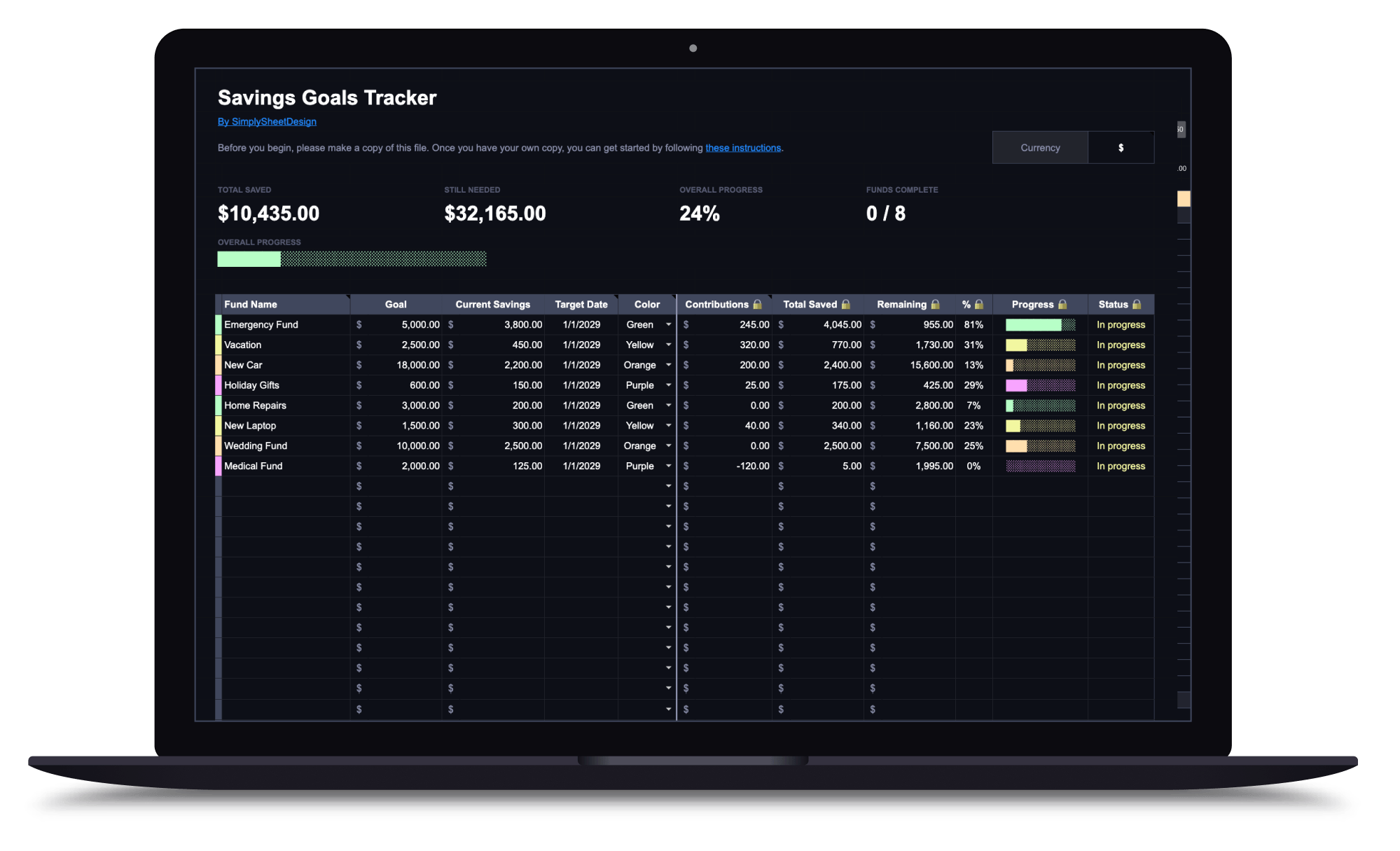
This is also why a spreadsheet tracker is helpful. You can set up categories for each sinking fund, plug in your target amounts and dates, and watch the balance grow as you add money each month. The math is simple, but automation keeps you from having to recalculate manually every month. Track your sinking funds in the Sinking Funds Tracker, which pairs monthly contribution tracking with a progress view so you can see which funds are on pace and which need adjustment.
Try plugging in one upcoming expense below. Seeing the monthly amount broken down often makes a large expense feel much more manageable.
Calculate your monthly savings
Updates automatically as you fill in both fields above.
Enter a target amount and a future target month to see your savings plan.
What’s the biggest mistake people make?
Trying to create twenty sinking funds immediately. Someone reads about sinking funds, realizes they’ve been caught off guard by dozens of expenses over the years, and decides to set up a fund for every single one: Christmas, birthdays, anniversaries, car maintenance, home maintenance, annual insurance, pets, vacations, clothing, gifts, subscriptions, property taxes, vehicle registration, dental work, and so on. Then they realize they have to update thirteen different categories every month and track thirteen different balances. Within two months the system feels like work, and by month four it’s abandoned.
A system that you maintain for four months and then quit isn’t helpful. A system that you maintain for a year is. Start small: pick the expense that catches you off guard most often, set up a sinking fund for that one thing, and get used to adding money each month and watching the balance grow. Make sure it feels automatic, not like a chore.
Once that feels easy, add a second one, maybe the expense that would hurt your monthly budget the most, or something you’re already stressed about. Give each system a season or two to feel normal, then expand if it makes sense. The habit matters more than perfect organization.
What’s the takeaway?
The goal isn’t having more bank accounts, more categories, or more complexity. It’s making expected expenses feel expected again.
Most financial stress comes from surprise. You knew Christmas was coming, you knew the insurance bill was due, you knew the car would need maintenance sometime, but the money was never there, so it became a crisis anyway. Sinking funds don’t reduce the cost of life: a vacation costs the same amount whether you save for it each month or pay for it all at once, and Christmas still costs what it costs. What sinking funds do is reduce the surprise.
You’re not scrambling, not choosing between competing needs, not pulling from savings or going into debt for something you knew was coming. The money is there because you planned for it months ago. The best budgets aren’t the ones that predict every surprise. They’re the ones that make fewer things feel like surprises in the first place.