Why Most Budgets Fail (and How to Fix Yours)

Listen to this article
Sarah downloads a budgeting app in January. She sets up eighteen categories, connects her accounts, and checks it every day for the first week. By February she’s checking once every two weeks. By March she hasn’t opened it at all.
The problem wasn’t that Sarah didn’t care about her money. The system asked for more than she could realistically keep up with, and once it stopped being easy, it stopped happening.
Why do so many budgets get abandoned?
Most people don’t quit budgeting because they don’t care. They quit because the system asks too much of them, week after week, until keeping up with it becomes its own chore on top of everything else.
This shows up in a few common ways: tracking every single penny instead of the categories that actually matter, building out a dozen or more categories that need constant sorting, rebuilding the whole budget from scratch every month instead of adjusting an existing one, or trying to be perfect from day one instead of starting rough and improving over time. Any one of these adds friction. A few of them together, the way Sarah’s eighteen categories did, make the system exhausting before it’s even had a chance to prove itself useful.
Is discipline really the problem?
It’s tempting to read a story like Sarah’s and conclude she just didn’t stick with it. That’s the wrong lesson. Consistency tends to matter far more than motivation, and most people blame themselves for a system that was never realistic to maintain in the first place.
A budget that requires daily logging of every transaction across eighteen categories isn’t a discipline problem waiting to happen, it’s a maintenance problem built in from the start. The people who keep budgeting long term usually aren’t more disciplined than everyone else. They just ended up with a system that asked less of them.
What makes a budget actually stick?
The systems that last tend to be built around habits, not features. A short weekly check-in instead of daily logging. One place to see everything at a glance instead of several screens or apps. A routine simple enough to repeat without having to relearn it each time. A weekly review that’s part of an existing routine, a Sunday evening habit, for instance, is often more valuable than a dashboard with dozens of charts that rarely get opened. The habit is what creates the awareness, not the dashboard sitting underneath it.
This is the same idea behind why awareness tends to beat automation: a system that asks a little of you, consistently, usually outperforms a system that asks nothing of you until it quietly stops being used at all.
Why do simple systems often outperform complicated ones?
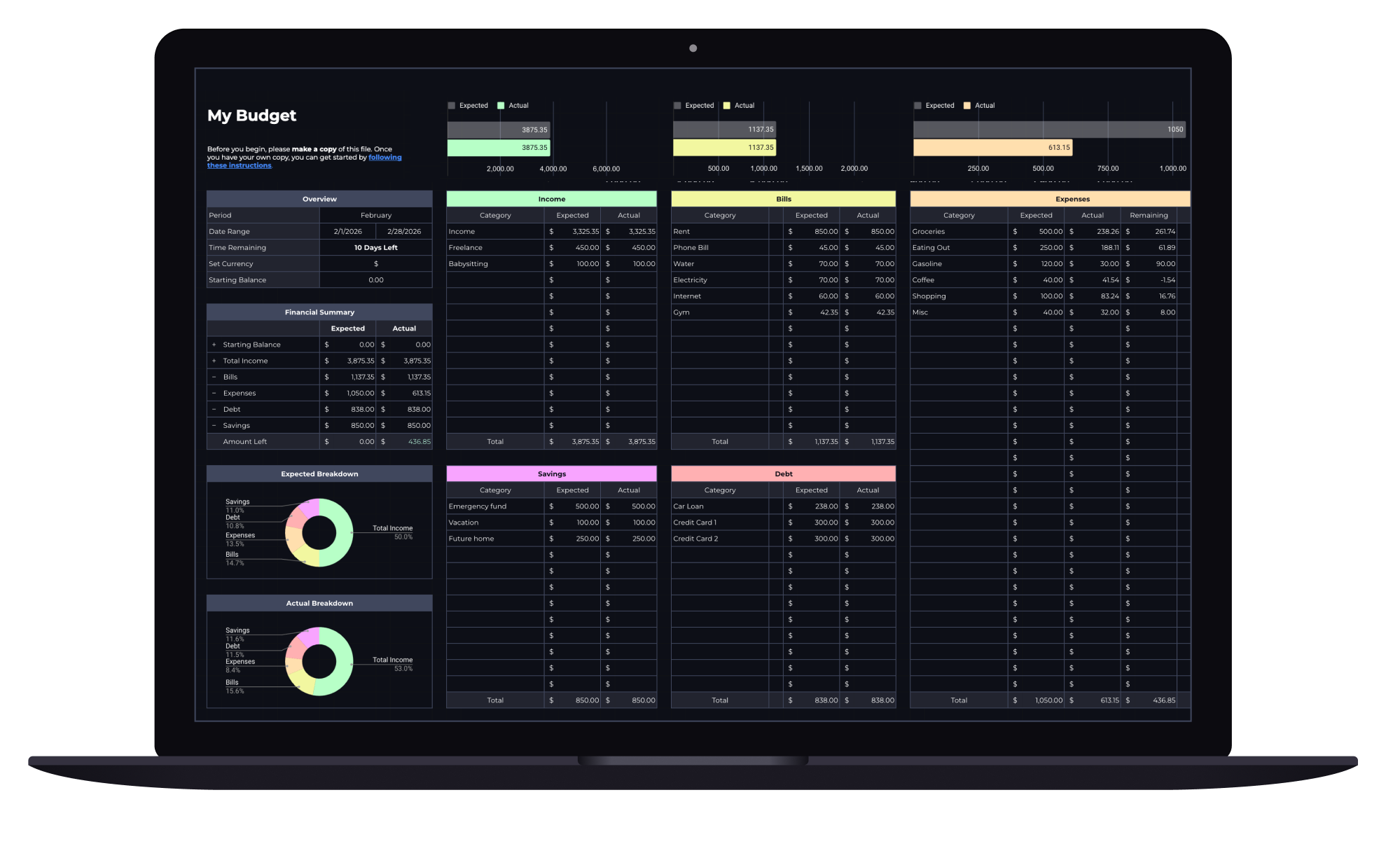
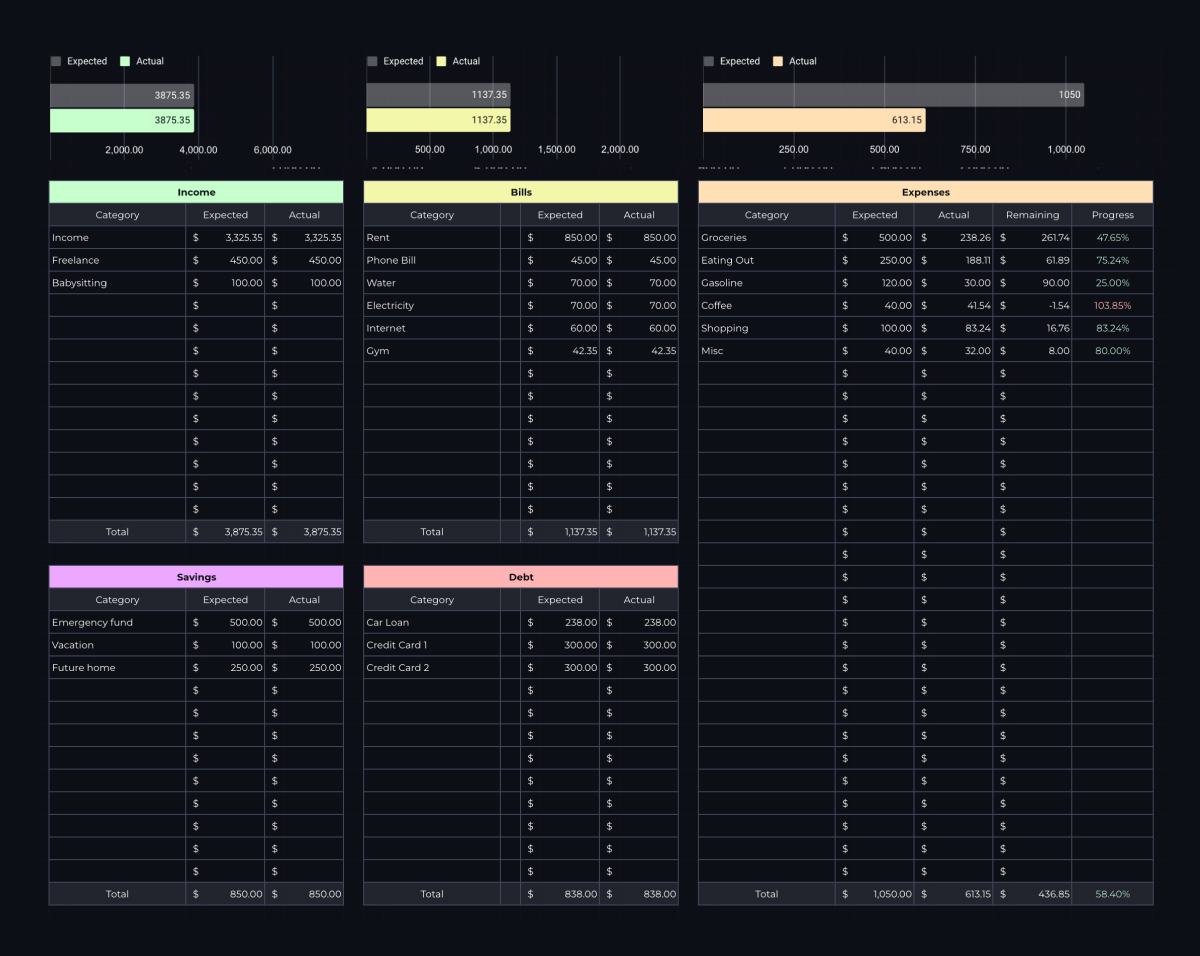
Simple doesn’t mean basic, it means easier to maintain. A budget with three or four broad categories that you actually check every week will outperform a budget with eighteen categories you stopped opening in March. The goal was never to build the most sophisticated system possible, it was to build one that’s still running six months from now.
This is also where the tool itself matters less than people expect. Whether it’s a spreadsheet or an app, the deciding factor is almost always whether the system fits how much time and attention someone is actually willing to give it, not which one has more features.
What should you do if budgeting has never worked for you before?
Start smaller than feels necessary. Track expenses for 30 days before building any categories at all, just to see where the money is actually going. If a structured framework would help, the 50/30/20 rule is a reasonable place to start. If the issue has been more about which kind of system fits your habits than which framework to use, it’s worth working out your budgeting style before picking a tool. Review whatever you build once a week, adjust it as you go, and resist the urge to optimize everything on day one. For many people, eighteen categories create more work than insight. Starting with three or four broad categories often makes a new budget much easier to maintain. And if large annual expenses (insurance renewals, holiday shopping, car maintenance) keep punching holes in your monthly budget, sinking funds spread those predictable costs across many months so they stop landing all at once. If part of the struggle is that your paycheck schedule itself doesn’t match the calendar, budgeting when you get paid every two weeks covers how to build a budget around your actual pay dates instead. And if it’s specifically the expense-tracking piece that keeps stalling out, tracking expenses in a spreadsheet without burning out covers how to recover from a missed day or week without treating it as a reason to start over.
What’s the real goal of budgeting?
It isn’t building perfect categories or tracking every dollar down to the cent. It’s understanding where your money is going well enough to make better decisions over time. A simple system you actually use will almost always outperform a perfect system you abandon by March, and that’s true whether the system is a spreadsheet, an app, or something built from scratch.