How to Budget on a Biweekly Paycheck

Listen to this article
If you get paid every two weeks, you’ve probably noticed that budgeting advice built around “monthly income” never quite fits. Some months your paychecks cover everything with room to spare. Other months feel tight for no obvious reason. Then, a few times a year, an extra paycheck shows up and throws the whole month off in the other direction.
None of that means you’re bad at budgeting. It means you’re trying to fit a biweekly pay schedule into a monthly framework, and the two don’t naturally line up. Once you budget around your actual paychecks instead of the calendar month, most of that confusion disappears.
Why do biweekly paychecks make monthly budgeting confusing?
A biweekly paycheck arrives every 14 days, not on the same two dates every month. Since most months are longer than 28 days, your pay date slowly drifts later in the month as the year goes on, then resets.
That drift is the whole source of the confusion. Monthly budgeting assumes a clean, repeating pattern: same income, same dates, every month. Biweekly pay doesn’t work that way. Some months you’ll get paid on the 2nd and the 16th. A few months later, it’s the 13th and the 27th. The number of paychecks landing inside any single calendar month can even change depending on where the dates fall.
This is different from semi-monthly pay, where you’re paid twice a month on fixed dates, usually the 1st and the 15th. Semi-monthly pay always gives you 24 paychecks a year and lines up neatly with the calendar. Biweekly pay gives you 26 paychecks a year, and because 26 doesn’t divide evenly into 12 months, it periodically produces a month with three paychecks instead of two.
Why do some months have three paychecks?
Biweekly pay is one of the most common payroll schedules in the U.S., and it comes with a quirk built into the math. There are 52 weeks in a year, so getting paid every two weeks means 26 paychecks annually, effectively two extra paychecks compared to someone paid semi-monthly, who only ever gets 24.
Twenty-six paychecks a year divided across twelve months averages out to a little more than two paychecks per month. Since paychecks can’t be split in half, that extra math has to land somewhere; most years, it lands in two separate months.
Here’s the simplest way to spot it coming: look at your pay calendar for the year. Any month where your first paycheck falls on or before the 3rd or 4th of the month has a decent chance of squeezing in a third paycheck 28 days later, before the month ends. It’s not random or a bonus from your employer, it’s just what happens when a 14-day pay cycle doesn’t divide evenly into a 30- or 31-day month.
Knowing which months these are ahead of time is one of the most useful things you can do for a biweekly budget, since it turns a “surprise” extra paycheck into something you already planned around.
Budgeting by month vs. budgeting by paycheck
Most budgeting advice, including things like the 50/30/20 rule, is written around one monthly number: here’s your income, split it into categories. That works fine if your income actually arrives that way.
Biweekly pay doesn’t. So instead of asking “what’s my monthly income,” a biweekly budget asks a smaller, more useful question: “what does this paycheck need to cover before the next one arrives?”
That shift matters for two reasons. First, it removes the guesswork of trying to average an income that doesn’t actually land in even monthly chunks. Second, it forces every bill and expense to get assigned to a specific paycheck, which is what actually prevents the “wait, where did that money go” feeling between paydays.
You can still think in monthly totals for savings goals or big-picture tracking. But the day-to-day plan (what gets paid when) works better built around two paychecks at a time, not one calendar month.
A step-by-step process for building a biweekly budget
1. List your paychecks for the next three months
Write down the actual dates you expect to be paid, not an estimate. Most payroll systems or HR portals show upcoming pay dates, or you can count forward in 14-day intervals from your last paycheck. This is also how you’ll spot which months have three paychecks instead of two.
2. List every bill with its due date
Go through your bank or credit card statements and write down every recurring bill along with the date it’s due: rent or mortgage, utilities, phone, internet, insurance, minimum debt payments, subscriptions, and anything else that repeats every month.
3. Assign each bill to a paycheck
For each bill, ask: which paycheck arrives before this is due, with a few days to spare? Assign the bill to that paycheck. If a due date sits close to your next payday, assign it to the earlier check so you’re never depending on a paycheck landing exactly on time.
4. Build a per-paycheck budget, not a monthly one
Once every bill has a paycheck assigned to it, you have two (or occasionally three) mini-budgets instead of one big one. Each paycheck covers its assigned bills first, then groceries and everyday spending, then savings or extra debt payments, then whatever’s left for discretionary spending.
5. Set aside a small buffer
Even with a solid system, timing doesn’t always cooperate: a paycheck posts a day late, or a bill’s due date shifts slightly. A buffer of even a few hundred dollars sitting in your checking account absorbs that friction so a one-day delay never turns into a missed payment.
Quick tip: don’t wait until next month to try this. Grab your next two paychecks right now and assign every dollar a job today. You’ll immediately see which bills belong to which paycheck, and whether anything’s currently falling through the cracks between them.
A simple example
Here’s what this looks like with realistic numbers. Say your take-home pay is $2,150 per paycheck, paid every other Friday. In a typical two-paycheck month, that’s $4,300 total. In a three-paycheck month, it’s $6,450.
| Paycheck | Covers | Example bills |
|---|---|---|
| Paycheck 1 | Beginning of the month | Rent, internet, gym, groceries |
| Paycheck 2 | End of the month | Car payment, phone, credit card minimum, savings |
Paycheck 1 (covers the first half of the month):
- Rent: $1,400
- Internet: $75
- Gym membership: $40
- Groceries and gas: ~$500 (remaining balance)
That leaves this paycheck fully allocated at $2,015 spent, with roughly $135 left as a small cushion.
Paycheck 2 (covers the second half of the month):
- Car payment: $310
- Phone bill: $65
- Streaming subscriptions: $35
- Minimum credit card payment: $120
- Savings transfer: $300
- Remaining groceries, gas, and discretionary spending: rest of the check
Notice that nothing here depends on “monthly income” as a single number. Each paycheck has its own job to do, and as long as both jobs get done, the month takes care of itself, regardless of which two Fridays the paychecks actually land on.
If matching specific bills to specific paychecks feels too prescriptive, there’s a simpler option: use one average number instead.
- Add up your take-home pay from the last few months.
- Divide by the number of paychecks in that stretch.
- Budget that average amount every payday, instead of deciding which bill goes with which check.
You’re still budgeting paycheck to paycheck, not by the calendar month. You’re just smoothing over the small stuff (which bill happens to land on which specific check) in exchange for one consistent number to expect every payday.
If you’d rather budget on a monthly figure, calculating monthly income from a biweekly paycheck shows why the right multiplier is about 2.17, not 2. This works best paired with a healthy buffer. See the FAQ below on dividing your annual income by 12. It’s the same idea, just stretched across a full year.
Try the calculator
Enter your take-home pay per paycheck below to see your typical month, your extra-paycheck months, and the steady average number mentioned above. Paid weekly instead? Switch the toggle below. The same math applies, just on a different cycle.
Use your average paycheck if your income varies.
Use this number when creating a monthly budget.
| Period | Count | Amount |
|---|---|---|
| Typical Month | 2 | $0 |
| 3-Paycheck Month | 3 | $0 |
| Monthly Buffer NeededIf you want your budget to stay consistent year-round, set aside this amount during months with an extra paycheck. | – | $0 |
| Per Year | 26 | $0 |
How to plan for bills that fall between paychecks
The trickiest part of biweekly budgeting isn’t the bills that land neatly after a paycheck, it’s the ones that don’t.
If a bill is due the same week your paycheck lands, you’re fine. The problem is a bill due, say, on the 20th when your paychecks fall on the 3rd and the 17th. Technically the 17th check covers it, but only if you haven’t already spent that money on something else by the 20th.
Two things fix this reliably. First, when you assign bills to paychecks in step 3 above, treat the assignment as a rule, not a suggestion: that money is spoken for the moment the paycheck lands, not whenever the bill happens to get paid. Second, for a bill that’s large relative to a single paycheck, like rent, consider splitting it across both checks instead of paying it in one lump sum (more on this below). That way you’re never relying on one specific paycheck to cover one specific large bill on one specific day.
Should you split rent across paychecks?
For a lot of people, yes. Instead of one paycheck absorbing almost the entire rent payment, set aside half of rent from each paycheck into a separate account, then pay the full amount when it’s due. Each paycheck ends up feeling more balanced, and rent stops being the one bill that makes one specific payday feel like it barely happened.
What to do with “extra” paycheck months
A three-paycheck month can feel like free money, and in a sense, it is. Since your regular bills are already covered by your normal two-paycheck plan, that third check isn’t spoken for by anything yet.
The mistake is treating it like a normal paycheck and letting it quietly absorb into everyday spending. Instead, decide what it’s for before it arrives.
Build or top off your buffer
If you don’t have one yet, this is the easiest way to start.
Make an extra debt payment
Applied directly to principal, it can meaningfully speed up a payoff timeline.
Fund something you’d otherwise save for over months
A big irregular expense (car maintenance, holiday spending, an annual insurance premium) stops feeling like a scramble when a spare paycheck already covered it.
Add to a savings goal
Since most budgets fail from a lack of a clear plan for extra money, rather than a lack of discipline, giving this paycheck a job the moment it arrives is what actually makes it count.
If you already know which months have three paychecks (see the section above), you can plan this months in advance instead of deciding on the fly when the money shows up.
Common mistakes and practical tips for biweekly budgets
Common mistakes to avoid
Treating a yearly average as a strict budget without a buffer
Dividing your annual income by 12 gives you a steady number, but a two-paycheck month actually brings in less than that average and a three-paycheck month brings in more. This works fine for plenty of people, but only if there’s a cash buffer sized to cover the gap in the months that fall short. Without one, the mismatch between the average and what’s actually landed is where the budget quietly comes up short.
Not noticing three-paycheck months in advance
Without planning ahead, an extra paycheck often just blends into regular spending instead of doing something useful.
Paying bills from whichever paycheck happens to be sitting in the account
Without assigning bills to specific paychecks ahead of time, it’s easy to spend from the wrong check and come up short when a bill is actually due.
Treating rent or another large bill as an afterthought
A single paycheck that’s almost entirely consumed by one bill makes that pay period feel a lot tighter than the others, even though the math works out fine over the full month.
Skipping the buffer
A system that only works when every paycheck lands exactly on schedule is a system that eventually breaks on the one week it doesn’t.
Tips that make it easier over time
Write out your pay dates for the next 6–12 months in one sitting
This is a one-time task that removes almost all the guesswork about which months need extra planning.
Name your buffer account something specific
Something like “payday cushion” makes you less tempted to dip into it for everyday spending.
Recheck your bill-to-paycheck assignments once or twice a year
Especially after a rent increase, a new subscription, or a bill’s due date changing.
Keep the system visible
Tracking where your money actually goes for a month or two makes it much easier to see whether your paycheck assignments still match reality.
Use a simple spreadsheet to lay out both paychecks side by side
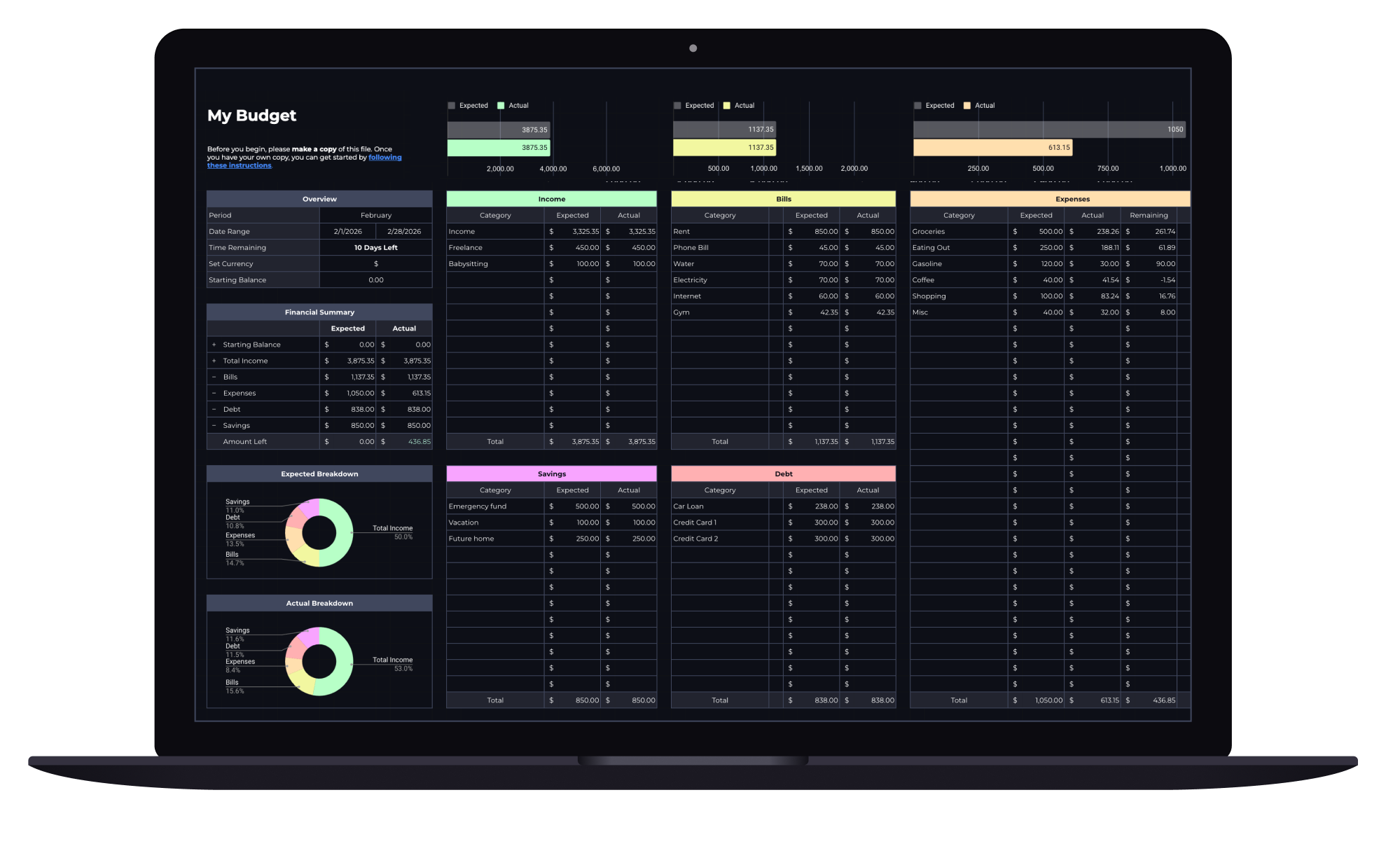
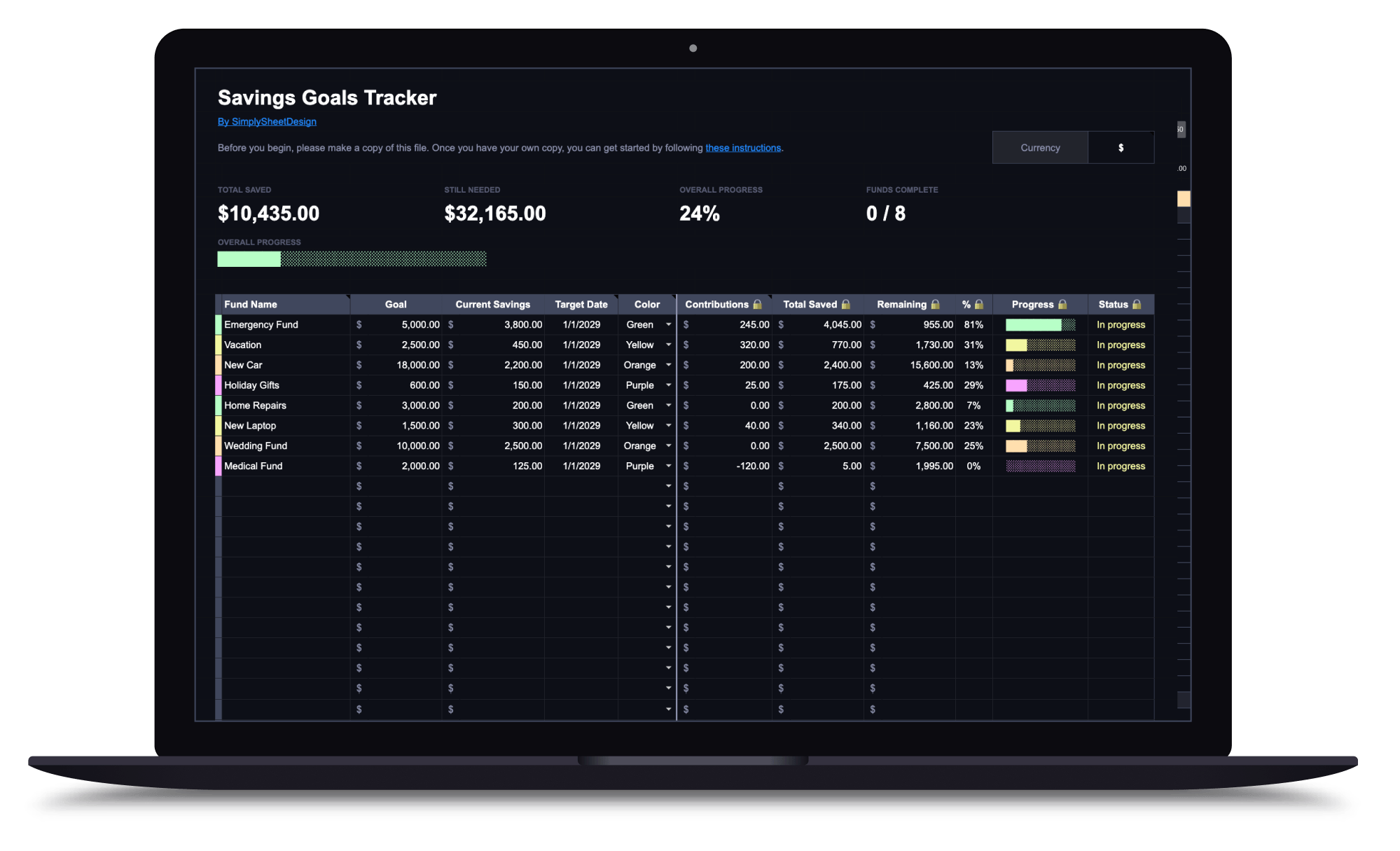
Seeing which bills are assigned to which check, and what’s left over after each one, makes the whole system easier to trust than trying to hold it all in your head. A budget spreadsheet built for this kind of paycheck-by-paycheck tracking can make the month-to-month upkeep a lot faster.
The bottom line
Biweekly pay isn’t a harder way to get paid, it just doesn’t match the calendar the way a lot of budgeting advice assumes it does. Once you build your plan around paychecks instead of months, assign every bill a specific payday, and give three-paycheck months a job in advance, the confusion mostly goes away.
Budgeting biweekly isn’t about doing more math. It’s about matching your budget to how your money actually arrives. Once every paycheck has a purpose before it hits your account, budgeting becomes a lot simpler.
If your income also changes in amount, not just in timing, budgeting with irregular income covers how to build a baseline when your paychecks vary. And if you’re on a steady monthly salary instead, budgeting on a fixed income is the better starting point.