
Is a Sinking Fund Right for This Expense?
Not every upcoming cost belongs in a sinking fund. Some are better covered by your emergency fund, and some are really just a monthly budget category. Answer 5 quick questions about the expense you're thinking about, and this assessment will tell you which one fits best.
How this assessment works
The five questions probe the two things that actually determine where an expense belongs: how predictable it is (do you know roughly when and how much?) and how it recurs (monthly drip, occasional lump, or genuine surprise). Your answers sort the expense into one of three buckets, along with the reasoning, so you can apply the same logic to the next expense without retaking anything.
If the answer turns out to be a sinking fund, the sinking fund calculator is the next step: it turns the target amount and date into a monthly contribution.
Sinking fund, emergency fund, or monthly budget?
The three buckets divide cleanly by predictability. Monthly budget categories are expenses that arrive every month at a similar size, like groceries and utilities; they don't need saving toward, just a realistic line item. Sinking funds cover expenses that are predictable but lumpy, like insurance premiums, holidays, and car maintenance; you know they're coming, so you pay for them in slices ahead of time. The emergency fund covers only what you genuinely couldn't schedule: income loss, medical surprises, things breaking without notice.
How sinking funds work goes deeper on the middle bucket, including why it's the one most budgets are missing entirely.
Why the right bucket matters
Miscategorized expenses are one of the quietest ways budgets fail. Treat a predictable cost as an emergency and your emergency fund never stays full, which makes real emergencies land on a credit card. Treat a lumpy annual cost as a monthly category and eleven months of the year look fine while the twelfth blows the plan apart.
Put each expense in its proper bucket and the pattern reverses: the emergency fund only drains for true surprises, lumpy costs arrive pre-paid, and your monthly budget describes a month that actually happens. If you're building that structure now, the emergency fund calculator sizes the surprise bucket, and a savings goals tracker keeps every named fund visible and on pace.
Frequently asked questions
What kinds of expenses belong in a sinking fund?
Expenses that are predictable in both timing and rough size: annual insurance premiums, holiday gifts, vacations, car registration, planned repairs, back-to-school costs, and yearly subscription renewals. If you can name the month and estimate the amount, it is a sinking fund candidate.
When should an expense come from my emergency fund instead?
When it is unexpected, necessary, and time-sensitive: a job loss, a medical bill, a furnace that dies in January. The test is predictability. If you could have seen it coming a year out, it was a sinking fund expense; the emergency fund is reserved for what you genuinely could not schedule.
When is something just a monthly budget category?
When it recurs every month at a similar size. Groceries, gas, utilities, and streaming subscriptions do not need a dedicated fund; they need a realistic line in your regular budget. Sinking funds are for costs that arrive occasionally in lumps, not continuously in drips.
Can one expense use more than one bucket?
Yes, and big expenses often do. A $1,200 car repair might take $700 from your car sinking fund and $500 from the emergency fund if the fund is not full yet. The buckets are a planning tool, not a law. The goal is simply that predictable costs stop being financed by surprise.
More free tools
Sinking Fund Calculator
Enter a target amount and target date to calculate exactly how much to save each month to hit your goal on time.
Emergency Fund Calculator
Enter your essential monthly expenses and see how much to keep saved for 3, 6, 9, or 12 months of coverage.
Expense Tracking Readiness
Answer 6 quick questions to find out if you have tracked enough spending to confidently build your first budget.
50/30/20 Budget Calculator
Enter your take-home pay and see how much to spend on needs, wants, and savings each month.
Once you know the bucket
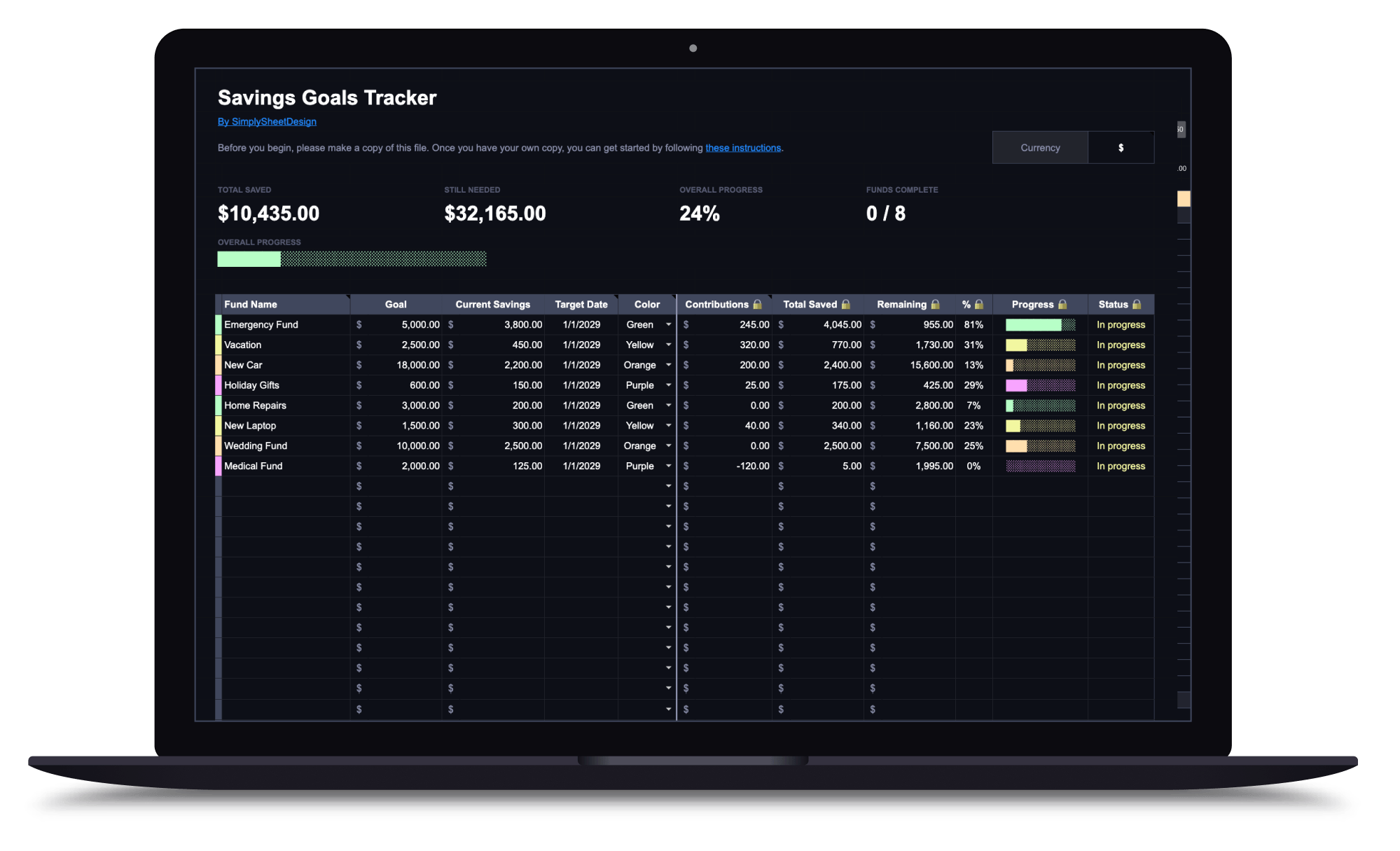
Savings Goals Tracker
Set multiple savings goals, track contributions, and watch your progress toward each one. Perfect for emergency funds, sinking funds, and any savings target.