
Biweekly Paycheck Calculator
If you're paid every two weeks, your income doesn't divide evenly into calendar months. Twice a year you'll get a third paycheck. Enter your take-home pay per paycheck below to see what a typical month looks like, what a three-paycheck month adds, and a steady average number you can budget against instead of tracking each paycheck individually.
How this calculator works
The calculator takes one number, your take-home pay per paycheck, and turns it into the figures that matter for a monthly budget. Your typical month is two paychecks. Your three-paycheck months add one more check on top of that. And your monthly average spreads all 26 paychecks evenly across 12 months, which is the steadiest number to plan around.
Take-home pay means what actually lands in your account after taxes, retirement contributions, and insurance. If you enter your gross salary the results will look better than your real life, which is exactly how budgets end up failing in week one.
Why some months have three paychecks
A biweekly schedule pays you every 14 days, but calendar months are longer than 28 days. That mismatch slowly pushes your paydays earlier in each month until, twice a year, a third payday squeezes in before the month ends.
Which months those are depends only on when your paydays fall, so two people at different companies will hit their extra months at different times. The FAQ below shows how to find yours, and How to Budget When You Get Paid Every Two Weeks walks through mapping your paydays for the whole year.
This is also the clearest difference between biweekly pay and a semi-monthly schedule, which pays on fixed dates and so never produces a third check.
Should you budget on the average or the typical month?
The safest approach is to build your budget on the typical two-paycheck month. If your regular bills and spending fit inside two paychecks, every month works, and the extra-paycheck months become pure surplus rather than something your plan depends on.
The monthly average is better as a planning number than a spending number. It's useful for questions like "can I afford this rent?" or "how much can I realistically save per year?" because it reflects your full annual income, which the Per Year row states directly. (If you want the math behind it, how to calculate monthly income from any paycheck walks through the times-26-divided-by-12 conversion.) But spending to the average every month means you're borrowing from the extra paychecks before they arrive. If your income also varies from check to check, budgeting with irregular income covers how to build a baseline month from a fluctuating paycheck.
What to do with an extra paycheck
If your budget runs on two paychecks, the third one arrives with no job assigned to it. That makes it the easiest money of the year to put toward a real goal: an emergency fund top-up, an extra debt payment, or an upcoming expense you'd otherwise scramble for. Use the emergency fund calculator to see how far one extra check moves you toward a fully funded cushion.
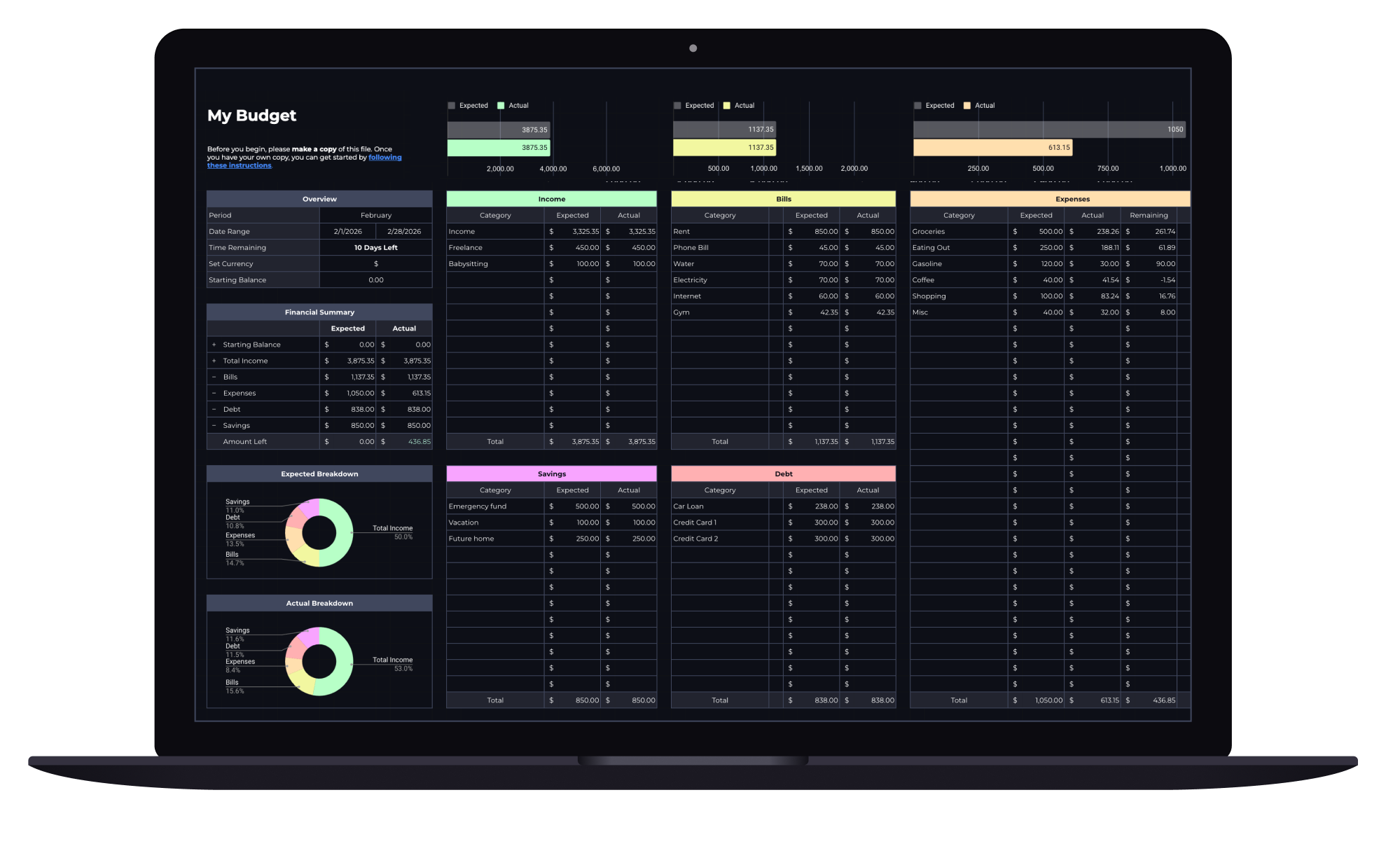
The one thing that reliably doesn't work is deciding in the moment. An unassigned paycheck in your checking account gets absorbed into everyday spending within a few weeks. Pick its job before the month starts, and track it alongside your regular paychecks in a budget spreadsheet so the surplus actually lands where you pointed it.
Frequently asked questions
How many three-paycheck months are there in a year?
If you are paid every two weeks, you receive 26 paychecks a year, which works out to two months with three paychecks and ten months with two. Which two months those are depends on your own payday schedule, not the calendar, so it varies from person to person.
Which months will have three paychecks?
It depends entirely on your payday schedule, not the calendar alone. Find your first payday of the year, then count forward in 14-day steps. Any month containing three of those paydays is a three-paycheck month. As a shortcut: if your first payday of a month lands on the 1st or 2nd, that month will almost always contain a third paycheck.
Should I use gross pay or take-home pay in this calculator?
Use take-home pay, meaning the amount that actually hits your bank account after taxes, retirement contributions, and insurance are withheld. Budgets built on gross pay overestimate what you can spend every single month.
Is it better to budget by month or by paycheck?
Most bills arrive monthly, so a monthly budget is usually the simpler frame. The most reliable approach for biweekly earners is to build the monthly budget on two paychecks only, then treat the third paycheck in extra months as a planned surplus. Budgeting paycheck-by-paycheck works too, and suits people who prefer to assign each check to specific bills.
What should I do with the money from a three-paycheck month?
Because your regular budget already covers the month with two paychecks, the third one is fully unassigned. Common uses are topping up an emergency fund, making an extra debt payment, or funding an upcoming irregular expense like car insurance or holiday spending. Deciding before the month arrives is what keeps it from disappearing into everyday spending.
More free tools
50/30/20 Budget Calculator
Enter your take-home pay and see how much to spend on needs, wants, and savings each month.
Emergency Fund Calculator
Enter your essential monthly expenses and see how much to keep saved for 3, 6, 9, or 12 months of coverage.
Sinking Fund Calculator
Enter a target amount and target date to calculate exactly how much to save each month to hit your goal on time.
Expense Tracking Readiness
Answer 6 quick questions to find out if you have tracked enough spending to confidently build your first budget.
Turn your paycheck math into a plan
Budget Spreadsheet
Track your income and daily expenses with real-time progress indicators that show exactly where you stand each month. Works with Google Sheets and Microsoft Excel.